Published: 11 July 2025
Formula 1 is shaped by circuits that are closely tied to the character of their races. Monza carries deep Italian racing history and the force of Ferrari support, while Singapore has given the modern calendar one of its most recognisable night-race settings. Abu Dhabi has built its own association at the other end of the season: a final-round Grand Prix where the year’s biggest stories often reach their last test.
Held at Yas Marina Circuit on Yas Island, the Abu Dhabi Grand Prix has been part of Formula 1 since 2009. Its marina setting, evening start and floodlit finish give the race a rhythm of its own, while its place at the end of the calendar adds a sharper sense of anticipation. When championships, team battles or final standings remain open, Abu Dhabi is where the season stops being theoretical and has to be settled on track.
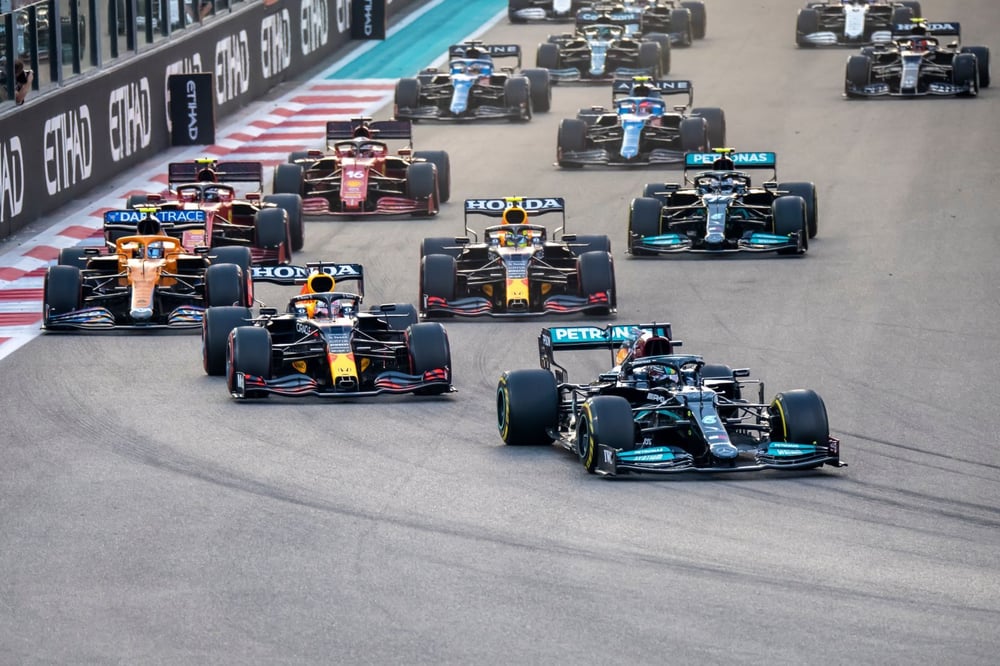
Yas Marina Circuit: The Home of the Abu Dhabi Grand Prix
Few modern circuits are as closely linked to their place in the calendar as Yas Marina. The Abu Dhabi Grand Prix has become Formula 1’s closing round, a race where championship battles, team rivalries and year-end standings often reach their conclusion.
Unlike Silverstone, Monza or Spa, Yas Marina does not draw its weight from decades of inherited racing history. Its place in the sport is more recent and more deliberate. Set on Yas Island, the circuit was built for a different era of Formula 1: floodlit racing, global audiences, premium hospitality and a race weekend that extends beyond the track itself.
The setting gives the Grand Prix much of its identity. The race begins in the low light of late afternoon and moves steadily into the evening as the light changes, so the atmosphere changes as the laps unfold. By the closing stages, the marina is lit, the grandstands are full, and the circuit has taken on the sharper feel of a season reaching its final page.
The figures give the event its frame. Yas Marina Circuit measures 5.281 km, with the Grand Prix run over 58 laps and a full race distance of 306.183 km. The track is known for its long, straight heavy braking zones and layout changes introduced to encourage faster, cleaner racing. Yet Yas Marina is not defined by numbers alone. Its importance lies in the role it plays: a modern Formula 1 venue where the season often ends not quietly, but with one last test of pace, tyre life and judgement.
A Circuit Built for Strategy
Yas Marina Circuit is a track of measured contrasts. It gives Formula 1 cars room to stretch their legs on the straights, then asks for patience through slower corners, clean traction on exit and careful tyre management over a race distance. It is not a circuit where aggression alone carries the day. The quickest lap is usually built through discipline: braking cleanly, protecting the rear tyres and choosing the right moment to attack.
The 2021 layout changes gave the track a more open rhythm. The old chicane before the North Hairpin was removed, the hairpin was widened, the South Marina section was reworked, and the hotel section was adjusted to help cars follow more closely. The aim was practical rather than decorative: more chances to race, fewer stop-start interruptions and a lap that allowed better flow without losing its tactical character.
For spectators, the circuit has several natural points of interest. The Turn 5 hairpin sets up one of the most important acceleration zones on the lap, with the long straight that follows giving drivers a clear chance to challenge. At the other end, the braking zone rewards timing but punishes overcommitment. The final sector then brings the cars through the more technical part of the lap, where mistakes are smaller on television than they feel inside the cockpit. That is part of Yas Marina’s character: quick in places, controlled in others, and rarely forgiving when strategy or tyre life begins to slip.
A Tale of Tactics and Final Sundays
Every season produces its own arguments in Formula 1, but Abu Dhabi has a habit of giving some of them their final act. Yas Marina Circuit has been tied to title-deciding Sundays since the early years of the race, from Sebastian Vettel’s 2010 championship in a four-way finale to Nico Rosberg’s carefully managed 2016 title and Max Verstappen’s first World Championship in 2021. More recently, the circuit has continued to shape the closing chapter of the season: Lando Norris won the 2024 race as McLaren secured its first Constructors’ Championship since 1998, then returned in 2025 to seal his first Drivers’ Championship with a podium finish behind Verstappen and Oscar Piastri.
That history gives the Abu Dhabi Grand Prix a particular kind of tension. It is not always the race winner who carries the weekend’s largest story. Sometimes the decisive work happens just behind the leader: a driver protecting tyres, a team calculating points, or a championship contender choosing caution where instinct might suggest attack. Like all good final acts, it rewards those who understand the stakes as well as the speed.
The race’s timing adds another layer to that calculation. Abu Dhabi begins in the softer light of late afternoon and moves into night racing under floodlights, so teams are not dealing with one fixed set of conditions from start to finish. As the evening settles, track temperature falls, grip changes and tyre behaviour becomes harder to judge. Practice, qualifying and race running do not always mirror each other neatly, which gives engineers and drivers more to think through than the lap chart alone suggests.
Beyond the Chequered Flag
Across the weekend, Yas Marina Circuit keeps the schedule busy with Formula 1 sessions, F2, the F4 UAE Trophy Round, fanzones and the Yasalam After-Race Concerts, giving visitors a full race-week programme rather than a seat for Sunday alone. For 2026, the entertainment line-up has already begun to take shape, with Zara Larsson and Lewis Capaldi announced for Thursday and Imagine Dragons set for Saturday, while further names are still to be confirmed.
That wider programme helps to shape the weekend outside of the track. Fans have a variety of options to choose from in the period between races; they can spend time in the fanzones, stay on for the evening concerts, and build the race around Yas Island’s hotels, restaurants and leisure attractions. Depending on the ticket category, access can also include selected experiences beyond the track, so the Grand Prix becomes part sporting event, part city break and part late-night social calendar.
Yas Marina Circuit also remains active long after the Formula 1 paddock has packed away. Guided venue tours take visitors through key areas such as the pit garages, podium and race control, while driving experiences give fans the chance to see the circuit from a very different angle. The choice ranges from performance cars and drift experiences to karting and Formula Yas 3000, the single-seater programme designed to bring visitors closer to the feel of a racing car.
For many fans, that is the value of Yas Marina outside Grand Prix weekend. The circuit can be seen without the noise, queues and pressure of the season finale, but still with enough access to make the visit feel meaningful. During race week, Abu Dhabi is one of Formula 1’s busiest closing weekends. The rest of the year, it gives motorsport followers a quieter way to get close to the track itself.