


Published: 24 June 2026
There is something enduring about the Mediterranean aesthetic, a quality that has allowed it to outlast trends, cross continents and remain as legible in contemporary luxury real estate as it was in the whitewashed villages that first gave it form.
In Abu Dhabi, that endurance is being put to work in new ways. Across the emirate's islands and coastlines, Mediterranean design has found a climate, a culture and a market ready to receive it — and in doing so, has evolved into something distinctly its own.
The Architecture of Ease
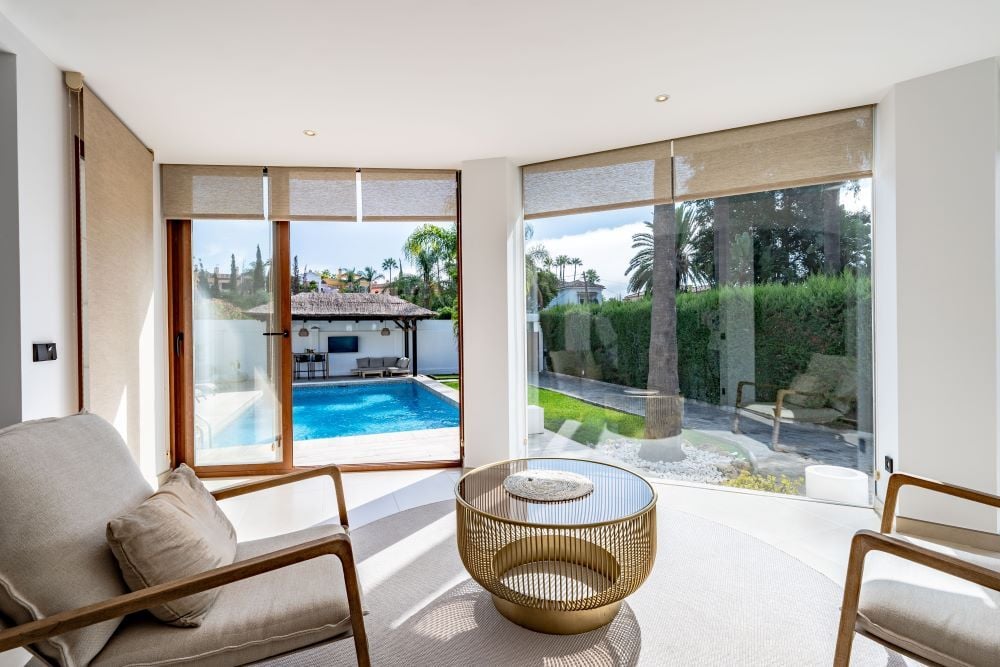
At its core, Mediterranean design is built around a single idea: that the boundary between inside and outside should be as permeable as possible. Floor-to-ceiling glazing that opens entirely onto terraces, central courtyards animated by water features or greenery, arched openings that soften the transition between rooms; these are not decorative choices but structural ones, born from a tradition of living in step with the natural environment. Light stucco facades and terracotta roof tiles complete the visual language, their pale tones and warm contrasts reflecting heat as much as they establish aesthetic character.
The materials that define luxury iterations of the style carry the same logic.
- Travertine and marble extend continuously from interior floors to pool decks, erasing the threshold between living space and landscape.
- Exposed timber beams — often reclaimed — bring warmth and scale to high-volume rooms.
- Wrought iron detailing in railings and fixtures adds an artisanal counterpoint to the smoothness of plaster and stone.
- Handcrafted zellige tiles, borrowed from the Moroccan tradition and absorbed long ago into the broader Mediterranean vocabulary, provide texture and individuality in kitchens and bathrooms where other materials might default to uniformity.
What makes the style particularly compelling to high-net-worth buyers is not merely its visual appeal but its structural intelligence. Thick walls and light exterior colours provide natural thermal regulation. The emphasis on natural light, cross-ventilation and biophilic design (greenery, water, the sensory presence of the outdoors) has measurable effects on wellbeing. And unlike the ultra-modern glass-box aesthetic that dominated a certain era of luxury development, Mediterranean architecture ages with grace. Its value does not depend on remaining cutting-edge; if anything, it deepens over time.
Abu Dhabi's Adaptation
Transplanting this language to the Gulf requires more than aesthetic borrowing. Abu Dhabi's climate demands a more rigorous approach to thermal performance, and the finest examples of Mediterranean design here integrate advanced exterior insulation systems beneath their smooth stucco finishes, maintaining the visual softness of the style while meeting the practical realities of peak summer heat. The result is architecture that is as effortlessly coastal but functional.
The cultural dimension adds another layer of complexity, and one that Abu Dhabi's developers and architects have handled with particular care. The Mediterranean courtyard, traditionally an open-air social hub at the heart of the home, finds a natural counterpart in the Arabian majlis, the dedicated reception space that defines Gulf hospitality. In the most accomplished local interpretations, these two typologies are fused: the courtyard becomes the transitional point between private family quarters and a grand, high-ceilinged reception hall, maintaining the architectural coherence of the Mediterranean model while accommodating the spatial expectations of the Gulf lifestyle.
A quieter but growing trend speaks to a different kind of aspiration. Private architecture firms across Abu Dhabi are increasingly commissioned to design large-scale Mediterranean farmhouses: bespoke retreats in more rural or peripheral settings, where expansive glass pocket panels, warm timber and extensive natural stone facades are used to create a sense of distance from the city. These are homes designed to slow life down, structured around privacy and natural materials rather than urban proximity.
A Language That Belongs Here
What has emerged in Abu Dhabi is not imitation but translation. The Mediterranean vocabulary, composed of its materials, its relationship to light and landscape, its insistence on the quality of everyday life, has been received, tested against a different climate and culture, and returned in a form that feels genuinely at home on the Gulf coast. For those who understand what the style represents, that is precisely the point: architecture that carries its origins lightly, and wears its new setting with equal conviction.